How to build AI agents and systems, with practical guides and code examples for engineers.
Learning resources covering core skills, visual explanations, and practical projects for building AI systems and agents.
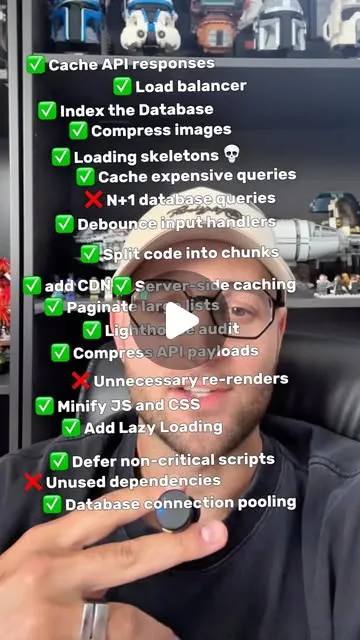
The reel discusses limitations of casual "vibe-coding" approaches when scaling applications with real user data. Claude does not optimize for scale by default, and when using databases like Supabase, performance becomes a critical factor that must be addressed through prompt engineering and intentional optimization strategies.
A collection of seven open-source GitHub repositories designed to accelerate AI agent development: Graft for codebase mapping, OpenMontage for video production workflows, Codebase Memory MCP for knowledge graph integration, Agency Agents with 232 specialist agents across domains, open-source agent tools for extended capabilities, Diagram Design for architecture visualization, and Scientific Agent Skills providing 160+ research-focused skills. The repos aim to reduce development time by offering pre-built components and workflows rather than building capabilities from scratch.
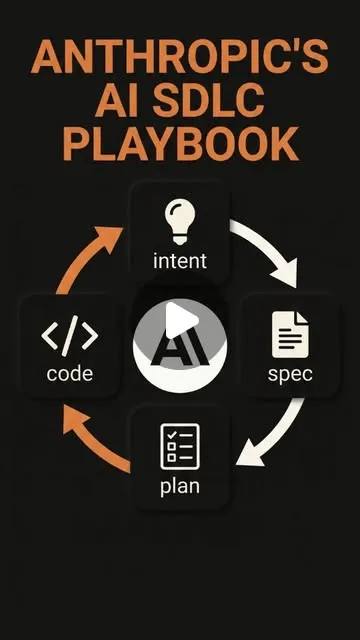
Anthropic released a playbook for restructuring software development workflows around AI agents, addressing the reality that while AI can write code quickly, planning, review, and deployment remain slow. The approach uses staged file commits through git: ideas become intent files, triggering specs, then plans, then code, with each handoff creating an audit trail. Safety is enforced through dual mechanisms - skills that encode company policy within agent behavior, and hooks that block unsafe actions. Critically, AI reviews pull requests but cannot approve its own code; humans retain final merge authority.
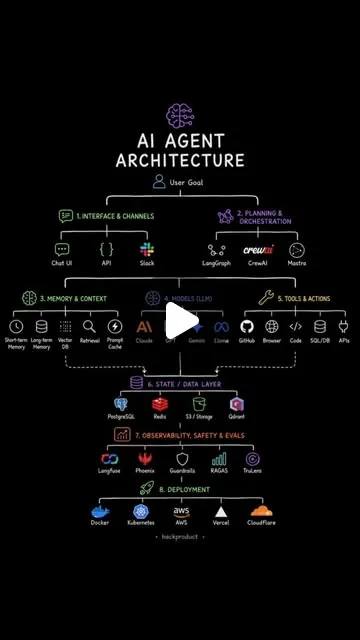
An AI agent is not simply an LLM with a prompt, but a complete system comprising an interface, orchestration layer, memory and context management, model selection, tools, persistent state and data storage, evaluation mechanisms, and deployment infrastructure. The mental model emphasizes that LLM does not equal agent; instead, an agent combines model, context, memory, tools, state, control loop, and evaluation capabilities. Rather than memorizing specific tools and logos, effective AI engineers should understand the underlying architecture and where each component belongs in the system design. This framework is positioned as essential knowledge for AI system design interviews and practical implementation.
Agent observability tools and practices are essential for production-ready AI agents. The reel identifies four tools that handle observability well: Langfuse (open source, self-hostable), Galileo (production-scale with hallucination detection), Braintrust (evaluation framework), and Phoenix (open source tracing from Arize). Five critical things to log are: every tool call with arguments and results, every model call including prompts, tokens, and costs, every decision branch showing why the agent acted or escalated, outcomes showing success and impact, and cost per task. Without these logs, you cannot debug, improve, or explain agent behavior, making observability the operational layer that transforms an AI agent from a liability into a manageable production system.
Many AI skills built by teams go unused because their descriptions are too vague to trigger appropriately. Skills only activate when their descriptions clearly tell the model when to use them, so imprecise wording causes them to sit dormant and waste the resources spent building them. The creator offers an audit prompt that scores every skill to identify which ones will never trigger in practice.
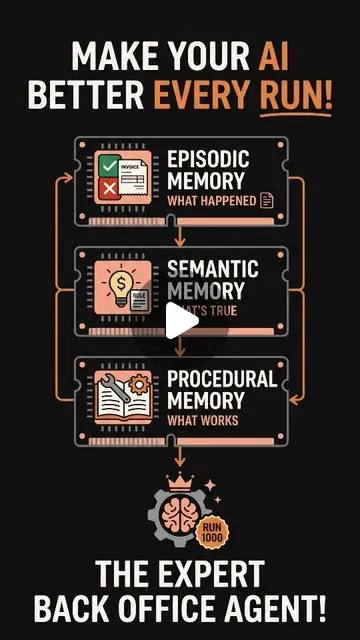
An invoice processing agent performs the same task consistently each time, but without memory layers it cannot improve or learn from experience. The post outlines three memory types that enable agent improvement: episodic memory logs what happened so human corrections become training data, semantic memory converts thousands of runs into business facts, and procedural memory saves solved edge cases as reusable playbooks. Together, these memory layers let AI agents compound performance across repeated tasks rather than starting from zero each time.
The creator uses Model Context Protocols (MCPs) to integrate marketing tools directly into Claude, automating tasks like SEO, email campaigns, paid ads, store management, and analytics through connectors within the AI interface. This workflow reduces time spent on dashboards and busywork, freeing bandwidth to focus on strategy rather than manual execution. The post emphasizes that this is a productivity multiplier for marketers, not a replacement for human decision-making, and promises further details in upcoming content.
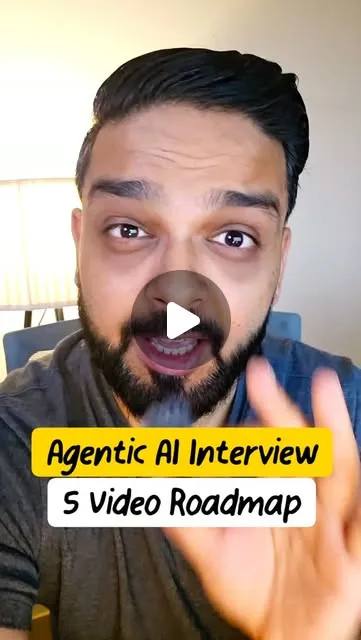
A video roadmap for preparing for agentic AI interviews that moves beyond memorizing APIs. The recommended learning path covers agent design, state and orchestration, tools and MCP (Model Context Protocol), evals, and context engineering. Five curated videos are arranged in the suggested order for pre-interview study.
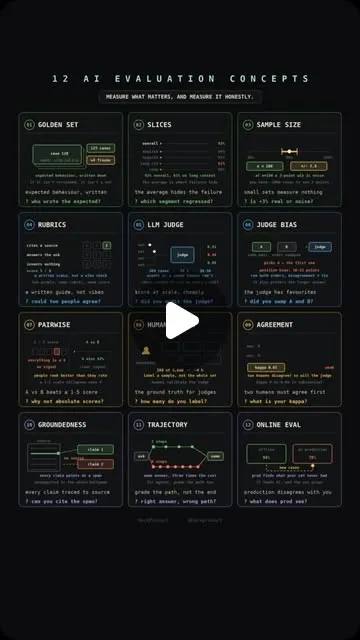
A 3-point improvement in eval scores within a margin of error of ±8 points (at 100 test cases) is statistically insignificant noise. The post outlines 12 key AI evaluation concepts: golden sets and versioned expected behavior, performance slices that reveal where averages hide failures, sample size requirements (roughly 1,000 cases needed to reliably detect 2-point differences), written rubrics for consistent scoring, LLM judges that can score 500 cases cheaply in seconds, judge bias including position bias (10-15 points depending on ordering) and length preference, pairwise comparisons that generate stronger signal than scales, human label calibration on samples not full sets, inter-rater agreement metrics like Cohen's kappa (0.61-0.80 is substantial), groundedness (claims linked to source spans), trajectory scoring for agents (right answer at 3x cost is still failure), and online evaluation against production data. Critical insight: LLM judges are not neutral and exhibit position bias; running evaluations in both orders can produce 10-15 point swings on identical content. The advice: always report confidence intervals rather than raw numbers, and screenshot evaluation grids before claiming improvements.
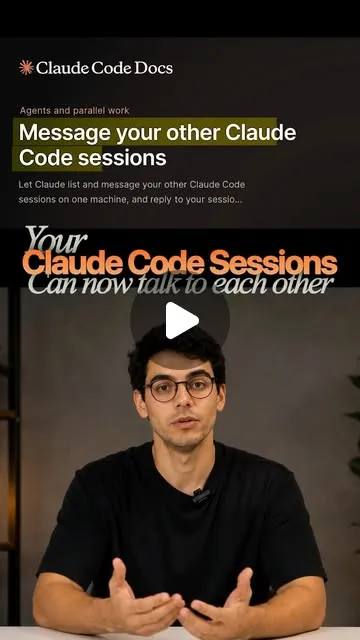
Claude Code sessions now support cross-session messaging, allowing multiple parallel coding sessions to communicate directly with each other. One session can notify another when its work affects a shared task, turning separate coding agents into a coordinated team. Messages are shared between sessions while files and conversation histories remain isolated. This capability enables coordinated parallel development workflows without manual intervention to manage dependencies between sessions.
RuFlow is an open source framework that runs 60 Claude agents in parallel, with each agent specializing in different tasks like planning, coding, testing, and security. The tool reduces Claude API costs by 75% through intelligent routing that directs basic tasks to free tier models and complex tasks to optimal paid models. Ranked #1 on GitHub in agent frameworks with 14,100 stars, RuFlow enables developers to maximize their Claude subscriptions by automating workflows across multiple specialized agents that learn and improve with each run.
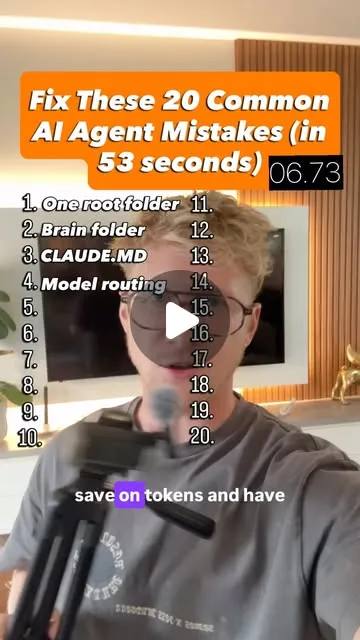
Most AI agents fail because they lack persistent memory and file structure, starting from scratch each session. The post outlines a complete folder architecture: a main projects folder with a brain folder containing rules and preferences, five core context files covering business, offer, customers, voice, and goals, a memory folder for session tracking, and an index file for navigation. Additional layers include model routing to optimize token usage, Obsidian integration for note-taking, GitHub for version control, a Now.md file for short-term memory linked to Notion for cross-session task management, and separate folders for skills, workflows, and reusable scripts. Passwords and API keys go in a .env file added to .gitignore for security. This systematic approach prevents project contamination and reduces token waste by maintaining clean context across sessions.
A GitHub repository with nearly 200,000 stars contains an instruction set that improves Claude's outputs by defining what the AI should NOT do rather than what it should do. The file prevents over-engineering of simple tasks, reduces confused outputs, eliminates unnecessary changes, and ensures Claude double-checks its work before responding. Users can integrate this constraint-based approach into their Claude projects for noticeably cleaner and more reliable results.
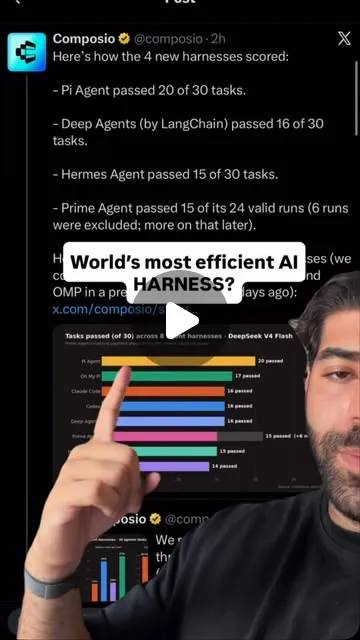
Composio benchmarked eight AI agent harnesses (Prime Agent, Pi Agent, Claude Code, Codex, Deep Agents, Hermes Agent, OpenCode, and Oh My Pi) on 30 real agentic tasks using DeepSeek V4 Flash. Pi Agent achieved the best results across all three metrics: 66.7% pass rate (highest), $0.012 per task (cheapest), and 132 seconds median execution time (fastest). The runner-up Prime Agent achieved 62.5% pass rate, $0.045 per task cost, and 242 seconds execution time. Pi Agent is an open-source harness framework designed for practical work, and the benchmark suggests that harness architecture and orchestration design are critical factors in task completion efficiency and cost optimization.
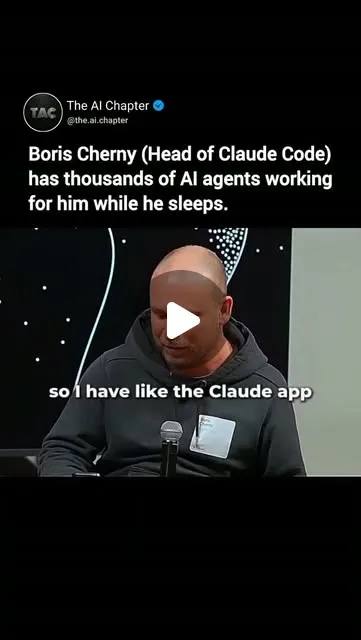
Boris Cherny, who built Claude Code, created an automated system using loops and cron scheduling that runs AI agents continuously on his development workflow. During working hours he runs five to ten parallel sessions with several hundred total agents operating simultaneously; while sleeping, thousands of agents handle deeper work. The system includes specialized loops that automatically monitor and fix pull requests, catch and resolve flaky tests, and aggregate product feedback from Twitter, GitHub, Discord, and support channels. Cherny ships twenty to thirty pull requests daily, with his last one hundred fifty entirely written by Claude. His latest addition, Routines, extends this loop architecture to run server-side so agents continue working after he closes his laptop.
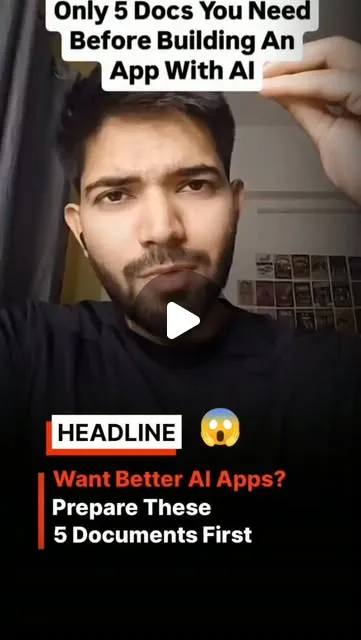
Before prompting an AI to build an application, prepare five foundational documents to provide proper context and increase success likelihood. The PRD (Product Requirements Document) defines what the app achieves and its features; the Technical Architecture Document explains structure and how components work together; the Security & Access Document specifies permissions and authentication; the Frontend Spec Document describes interface design and behavior; and the Feature Ticket List breaks the project into clear development tasks. These documents give AI substantially better context about what to build, how it should function, how it should look, and how to execute it, making the actual app-building process far more efficient and reducing failure risk.
Claude has a /brag skill that automatically generates professional 20-second launch videos for side projects, complete with music, motion, sound effects, and social-ready copy. Users simply prompt Claude to "let's /brag about this" and receive a polished trailer without manual editing work. The tool runs on HyperFrames, HeyGen's open-source HTML-to-video engine, and includes multiple style presets and demo projects for testing. It's free and open source, positioning itself as essential infrastructure for indie hackers and builders launching products on social media.
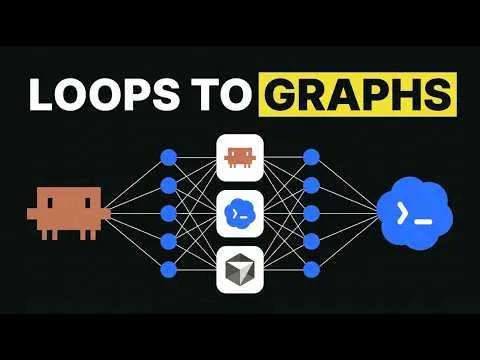
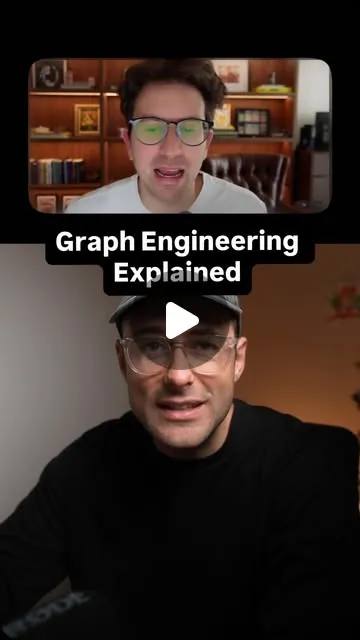
Graph engineering is an emerging approach where AI agents organize work as connected steps (nodes) rather than executing everything in a single conversation. Each node represents a distinct task-like researching, coding, testing, or verification-forming a visible workflow structure. However, the visual shape can mask underlying problems; if one step makes incorrect assumptions, subsequent steps may still appear complete. Graph engineering evolved from earlier concepts like prompt engineering, context engineering, and loops, adding structure through nodes (steps), edges (routes), state (information flow), and conditions (routing rules). The system comprises three nested layers: the harness (external tools and environment like Claude, code execution platforms), the graph (workflow order), and loops (try-check-retry cycles within steps). Existing AI platforms already implement pieces of graph engineering through features like goal mode, loop mode, sub-agents, dynamic workflows, and verification systems.
LangChain is often misunderstood as merely another AI library, but it functions as an orchestration layer that connects large language models with external systems and application logic. While LLM providers like OpenAI, Gemini, and Claude offer powerful APIs for text generation and reasoning, production-grade AI applications require additional capabilities including conversation memory, retrieval-augmented generation, tool integrations, database access, multi-step workflows, agent coordination, and state management. LangChain provides reusable components and abstractions that handle these requirements without developers needing to build them from scratch. The framework enables common use cases such as AI chatbots, RAG applications, AI agents, customer support systems, research assistants, enterprise knowledge search, and workflow automation.
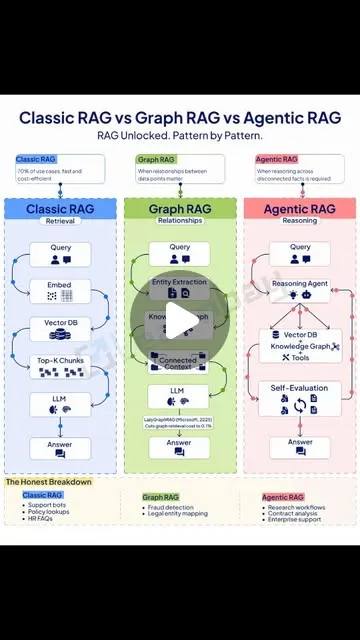
RAG architecture selection depends on the problem being solved, not on following trends. Classic RAG addresses retrieval, Graph RAG handles relationships, and Agentic RAG enables reasoning across multiple tools and decisions. Many engineers default to Agentic AI because it's currently trending, but experienced practitioners prioritize simplicity, latency, and cost optimization before adding complexity. The key distinction is understanding trade-offs: architecture decisions should be driven by actual requirements rather than hype.
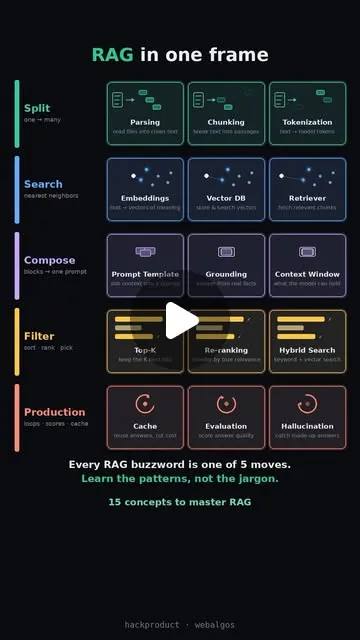
RAG (Retrieval-Augmented Generation) terminology can seem overwhelming, but all core concepts fit into five repeatable patterns: Split (chunking, parsing, tokenization), Search (embeddings, vector databases, retrievers), Compose (prompt templates, grounding, context windows), Filter (top-K, re-ranking, hybrid search), and Production (caching, evaluation, hallucination detection). Understanding these underlying patterns rather than memorizing individual tools enables you to design and debug RAG pipelines effectively instead of relying on tutorials.
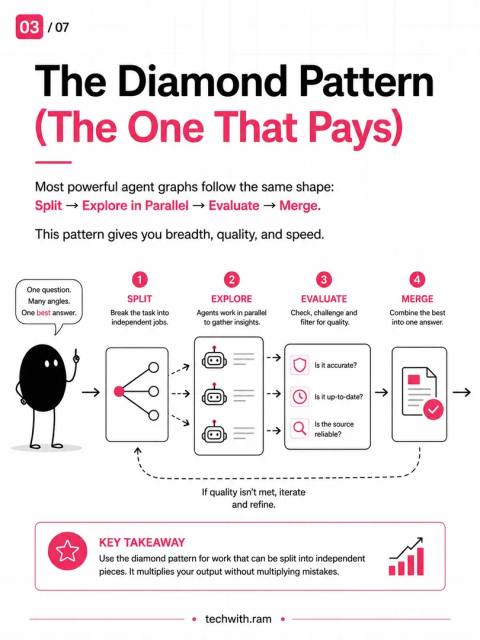
A single agent can handle one task, but sophisticated systems require connecting multiple specialized agents through deterministic routing logic based on workflow state and results. The evolution path moves from a monolithic prompt to specialized agents (researcher, builder, reviewer) linked in a graph structure that handles routing, branching, merging, retries, human pauses, and failure recovery. Start simple with one focused agent, then add control flow loops for self-improvement, split into specialists only when needed, and connect them via explicit edges that determine execution order based on state rather than sequential prompting.
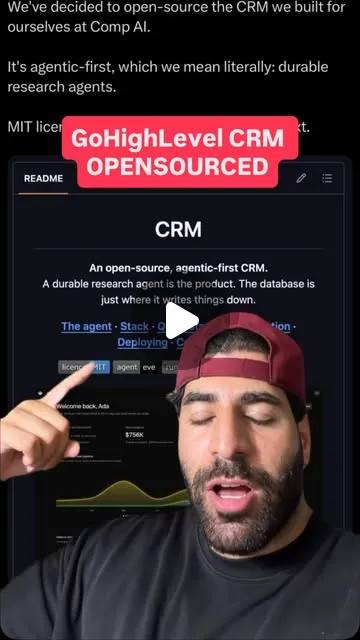
An open-source, MIT-licensed CRM that treats the AI agent as the primary interface rather than a secondary feature-the CRM is where the agent writes its findings. The agent runs autonomously on its own schedule, researches contacts and companies, and continues working without user interaction. It includes 18 built-in tools (research, enrichment, fact recording, scheduling rechecks) plus customizable plain-English skill instructions, strong-evidence-only fact logging to avoid confident errors, sandboxed execution with zero outbound network access to prevent data leaks, and contact building from synced email and meetings rather than vendor data. Built on Claude, Next.js, Postgres, and Vercel's Eve framework, it's self-hosted (requires Bun, Docker, Google OAuth setup) and very early-stage (20 GitHub stars at posting), so treat it as a promising prototype rather than a production-ready product.
A creator demonstrates seven skills that integrate with Claude to build an automated creative studio for content production. Key skills include Remotion for animations and explainer videos, Competitor Ads Extractor for live ad research, Deep Research for market analysis, Voice DNA to match your writing style, 11 Laps for podcast/audio conversion, and Content Research Writer for research-backed copywriting. The creator emphasizes that Voice DNA is particularly valuable because it learns from your past posts and makes all AI-generated content sound authentically yours rather than generic AI output. Most of these skills are free except for 11 Laps, which requires a subscription. The underlying philosophy is that while AI handles the creative heavy lifting, human judgment remains essential for quality assurance and taste.
Graph engineering structures multi-step AI work as connected jobs (visualized with arrows) rather than single conversation threads. It's most useful for workflows with multiple parallel paths and outputs that require verification, not for brainstorming or simple summarization tasks. The core pattern splits one question into parallel research streams (customers, competitors, distribution), then merges results into a single recommendation requiring human sign-off. A critical rule: the writing and checking steps must use separate AI models, since one model evaluating its own output is inherently flawed. The best approach is to manually sketch the workflow on a whiteboard and test each job in separate chats before automating; if the manual version isn't better, automation only speeds up bad processes.
Claude now has vision capabilities that allow it to analyze videos by either reading transcripts or processing frame-by-frame imagery. Two methods enable this: one grabs video content directly while another extracts and analyzes individual frames, working for reels, shorts, and longer videos up to 30 minutes. The process runs entirely locally with zero API costs and operates at high speed, making it a significant upgrade over Claude's previous transcript-only limitations.
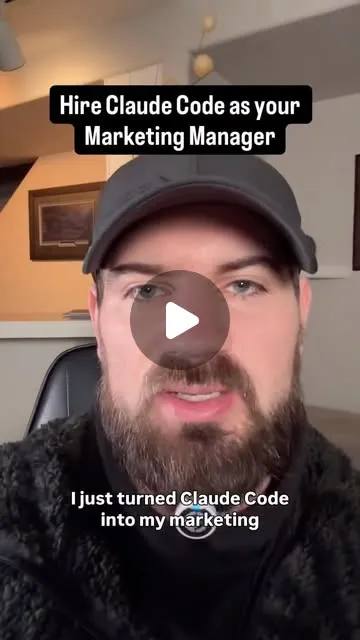
Using Claude Code (Anthropic's AI coding interface), the creator built an automated marketing manager that handles multiple marketing tasks without hiring a dedicated employee. The system generates landing pages, creates brand kits, and writes conversion-optimized copy on demand, reducing the need for manual marketing work or expensive hires. This demonstrates how AI agents can be configured to handle specific business functions when given the right instructions and integrations, effectively installing marketing capabilities into your workflow rather than adding headcount.
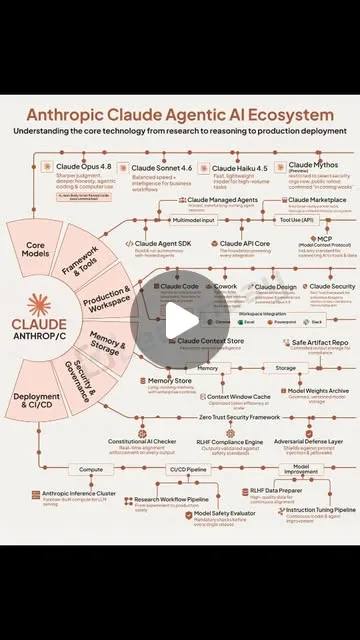
Anthropic is expanding Claude beyond a standalone language model into a comprehensive AI operating system that includes reasoning models, agent frameworks, APIs, managed agents, memory systems, security layers, governance, evaluation pipelines, and production deployment infrastructure. The shift represents a move from simple model comparisons (Opus vs Sonnet) to understanding how multiple components work together as an integrated platform. For developers and AI engineers, this means that technical competency in 2026 will require knowledge of the entire ecosystem--including memory management, Model Context Protocol (MCP), context stores, evaluation pipelines, and deployment architecture--rather than just prompt engineering or knowing which model performs best. Success in building AI products will belong to those who understand how all these layers integrate together, not just those experimenting with individual models.
#claude#ai#ai engineering#ai agents#agentic ai#enterprise ai
This post highlights graph engineering as a crucial skill for building AI agents, workflows, and production LLM applications. A well-designed graph provides benefits beyond just performance improvements, making agents easier to debug, extend, and maintain while building trust in the system. The post suggests that understanding graph engineering principles is essential for anyone working with modern AI systems at scale.
The reel argues that generic Claude Code websites result from poor setup rather than AI limitations. Three specific skills in motion, spacing, and typography can dramatically improve UI quality and create premium results using the same AI model. The content emphasizes that design fundamentals matter more than the tool itself.
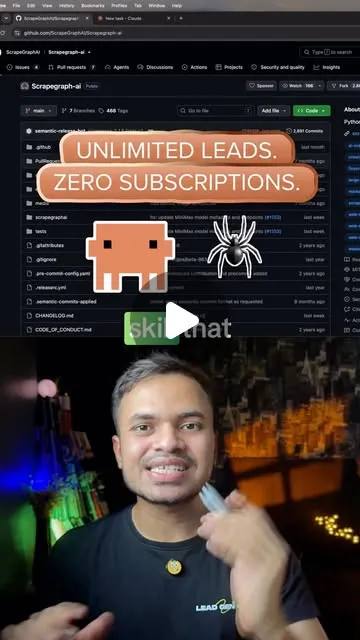
Claude's capabilities now eliminate the need for paid web scraping subscriptions. A free GitHub skill enables Claude Code to function as a complete web scraping solution that automatically adapts when website layouts change. Users can describe the data they want scraped and receive clean, organized results without manual maintenance.
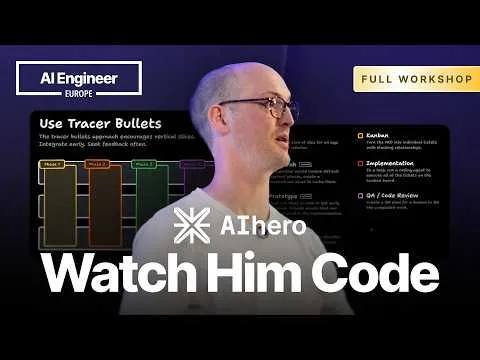
Matt Pocock presents a workshop on effective AI-assisted coding practices, emphasizing that classical software engineering fundamentals apply equally to working with LLMs. He explains the concept of LLM "smart zones" and "dumb zones": models perform optimally with fresh context but degrade as tokens accumulate (around 100K tokens), requiring developers to structure tasks to stay within the smart zone rather than pushing models to process overly large contexts. The core workflow strategy involves breaking large tasks into smaller, manageable phases that each fit within optimal token windows, treating complex problems like multi-phase loops rather than linear sequences. This approach prevents the accumulation of context sediment and reduces unnecessary token expenditure, applying established practices from software engineering (like those from Martin Fowler and The Pragmatic Programmer) to the AI coding paradigm.
Part 12 of a 100-episode series exploring different AI tools over 100 days. This reel highlights a specific AI tool as part of a larger educational journey covering the AI tooling ecosystem, aimed at creators and business professionals interested in understanding practical applications and capabilities of various AI technologies.
A short Instagram Reel showcasing Replit's latest features or updates that impressed the creator. The vague but enthusiastic title suggests the creator was surprised by the quality or comprehensiveness of what Replit has delivered, likely covering improvements to their coding environment, AI integration, or development platform capabilities.
An Instagram reel offering a guide on comment-based SEO techniques. The post uses a call-to-action prompting viewers to comment for access to the complete guide, positioning it as a resource for improving search engine optimization through comment strategies. Tagged with SEO, SEO agents, and Claude-related skills.
Claude can generate comprehensive research verdicts on companies in 2-5 minutes by uploading 6 related PDFs and using a specific prompt. The creator shares the prompt via pinned messages on Telegram, making it accessible for faster financial analysis and investment research.
Claude's artifact feature can replace Power BI and Tableau for small teams by enabling users to build live dashboards with an integrated AI chatbox. The dashboard auto-visualizes columns, refreshes on demand, and allows teams to query their data through natural conversation rather than learning complex BI tool interfaces. The creator offers step-by-step instructions and prompts via comment request for those wanting to implement this approach themselves.
Claude Desktop now offers free ready-made workflow plugins specifically for small business tasks like invoice chasing, payroll planning, CRM cleanup, and contract reviews. The example workflow demonstrates how users can automate Friday invoice chasing: open the plugin, run "chase invoice," and Claude automatically pulls unpaid invoices from accounting software and generates personalized follow-up messages for each client-users only need to approve and send. Installation is straightforward through Claude Desktop app's Customize section by browsing plugins and searching "small business." This targets Indian MSMEs and small business owners looking to eliminate repetitive administrative work without hiring additional staff.
This Instagram reel showcases specialized Claude skills designed to transform Claude into a comprehensive creator studio. The post highlights various capabilities that enhance Claude's functionality for content creation workflows. Viewers are encouraged to comment 'skills' to receive the full installation guide, suggesting these are custom additions or extensions that require setup. The reel targets creators and AI enthusiasts interested in maximizing Claude's potential for production-focused tasks.
This Instagram reel showcases five Claude-based tools designed to help with Meta ads strategy and competitive intelligence. The tools include: /spy for spying on competitor ads, /bulkcreative for generating ad creatives at scale, /adscore for scoring ad performance, /competitive-ads-extractor for extracting competitor ad data, and /adsmeta for analyzing Meta ads metadata. A full installation guide is available by commenting on the post, suggesting these are either custom Claude tools or prompts users can set up themselves for advertising research and optimization workflows.
An AI mini hackathon partnership with Boss Babe and Natalie offering hands-on training to build two AI agents. The live event runs July 9th from 2-4pm ET with replay access available. Interested participants can comment OFFLINE to receive more details about registration and event structure.
Claude design is presented as one of the best AI design tools but is expensive for serious projects. An open source alternative that replicates Claude design's functionality and interface has become available. The creator offers to share a setup guide and tool link for those interested in the alternative.
Claude AI can assist e-commerce businesses with tasks including writing product descriptions, generating marketing content, brainstorming ideas, and responding to customer queries. The tool helps online sellers improve workflow and save time on repetitive tasks. However, the quality of AI-generated content depends heavily on the quality of prompts provided, human review, and alignment with specific business needs. All AI-generated content should be verified for accuracy before publishing. The video has resonated with entrepreneurs and online store owners exploring how AI is transforming digital business operations.
A five-part video series covering the complete process of evaluating RAG systems properly, moving beyond informal testing to structured evaluation methodologies. The content covers evaluation fundamentals, RAGAS metrics for measuring RAG performance, techniques for improving retrieval quality, using LangSmith for experimentation, and implementing continuous evaluation frameworks. The creator emphasizes that proper RAG evaluation requires systematic approaches rather than casual spot-checking with a handful of test questions.
A new Meta Ads plugin for Claude offers 16 integrated skills and 9 agents designed to handle performance marketing tasks including analysis and strategy development. The plugin connects directly through Meta's official MCP integration, providing a secure way to automate and optimize ad campaigns within Claude.
A brief Instagram Reel showcasing how Claude AI simplifies ecommerce business tasks. The creator demonstrates that building and running an online store becomes significantly easier when leveraging Claude's capabilities for automation, content creation, and business operations.
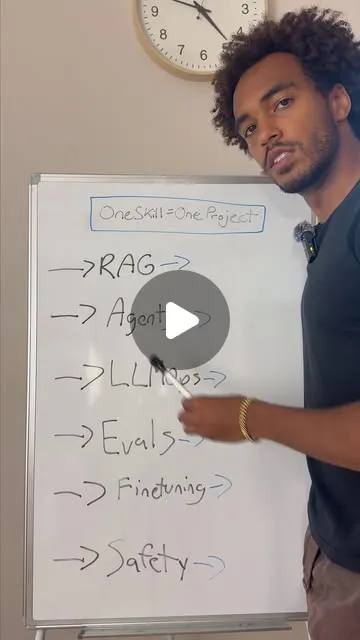
Essential AI engineering competencies demonstrated through practical projects: RAG systems with knowledge graphs for complex queries, multi-agent architectures with supervisor patterns, LLMOps infrastructure for provider failover, evaluation frameworks using LLMs calibrated to human judgment, fine-tuning to distill frontier models into efficient 8B variants, and automated safety testing via red-teaming on every deployment.
Five MCP servers enhance Claude's capabilities: Perplexity MCP for real-time research, Playwright for browser automation, Firecrawl for website crawling, Glyph for multimodal generation, and Chrome MCP for live browser interaction. Together these tools make Claude more practical for real-world execution tasks.
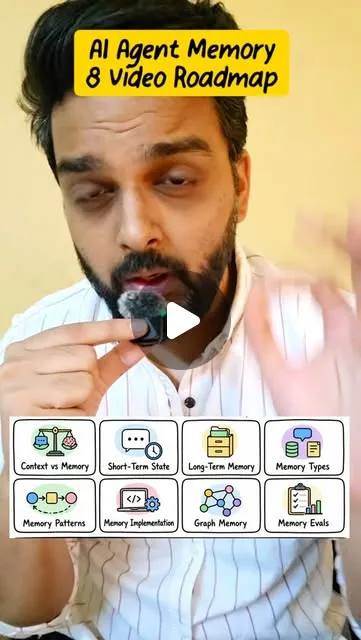
True AI memory systems go beyond storing entire chat histories, which causes context pollution. Effective memory selectively decides what to store, retrieve, update, ignore, and test. The key distinction is remembering the right information at the right time rather than everything, requiring understanding of context vs memory, short-term state, long-term memory types, patterns, implementation, graph memory, and evaluation methods.
A visual guide highlighting three free websites that teach fundamental AI concepts including mathematics, machine learning, and large language models without requiring paid courses or technical lectures. The reel encourages beginners to understand AI foundations before jumping into tools.
A curated selection of three educational videos introducing agentic AI systems: AWS and OpenAI engineers discuss enterprise design patterns, Langchain's cofounder covers evaluation frameworks for agents, and Harness Engineering provides practical implementation guidance on the AI Engineer YouTube channel.
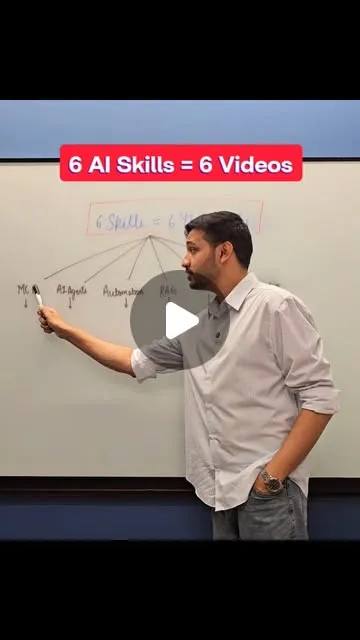
A curated guide pairing six essential AI engineering skills with YouTube channels offering quality videos and playlists for learning them: Model Context Protocol (MCP), AI Agents, RAG (Retrieval-Augmented Generation), Automation, Prompting, and LLM tools.