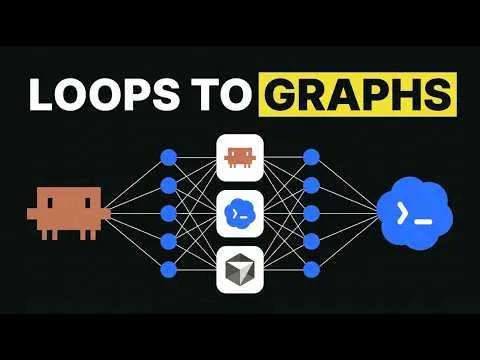
After Loops We Have Graph Engineering
youtube.comHarshit Tyagi · Video

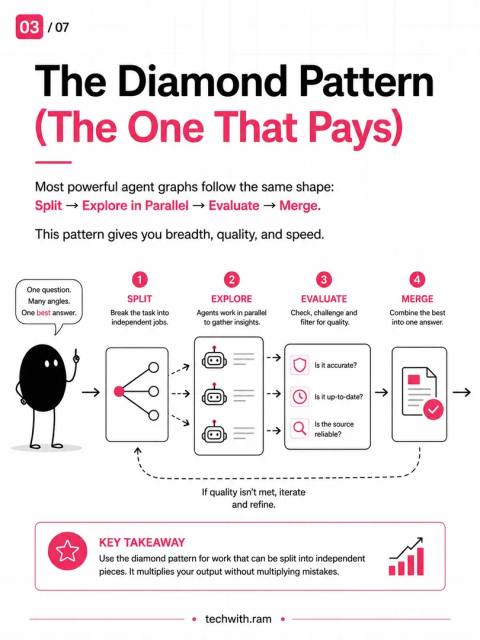
Graph engineering is an emerging approach where AI agents organize work as connected steps (nodes) rather than executing everything in a single conversation. Each node represents a distinct task-like researching, coding, testing, or verification-forming a visible workflow structure. However, the visual shape can mask underlying problems; if one step makes incorrect assumptions, subsequent steps may still appear complete. Graph engineering evolved from earlier concepts like prompt engineering, context engineering, and loops, adding structure through nodes (steps), edges (routes), state (information flow), and conditions (routing rules). The system comprises three nested layers: the harness (external tools and environment like Claude, code execution platforms), the graph (workflow order), and loops (try-check-retry cycles within steps). Existing AI platforms already implement pieces of graph engineering through features like goal mode, loop mode, sub-agents, dynamic workflows, and verification systems.
#ai#ai agents#agentic ai#llm#ai engineering#learning resources